
Cracking coding interviews demands strategic preparation. Key elements include understanding cheating prevention methods, meticulous question interpretation, and cultivating robust problem-solving skills. Mock exams, mind mapping, and behavioral questions are crucial for success. Active learning through daily practice and platforms like LeetCode enhances comprehension. Fair assessment practices focus on individual strengths, leading to better hiring outcomes. The core value proposition: a natural, active, fair approach highlights problem-solving abilities in interviews.
In today’s tech-driven landscape, cracking the coding interview is more than just securing a job; it’s a gateway to pivotal career opportunities. Yet, navigating these assessments can be daunting, with candidates often facing intricate algorithms, system design questions, and unexpected scenarios. This article delves into the heart of this challenge, offering an authoritative guide to mastering coding interviews. We’ll explore effective strategies, common pitfalls, and practical techniques for enhancing problem-solving skills. By the end, readers will be equipped to approach these exams with confidence, ensuring they stand out in a competitive job market.
- Understanding Common Coding Interview Questions
- Preparing for Algorithmic Challenges
- Practicing with Mock Exams
- Mastering Behavioral and Technical Assessment
Understanding Common Coding Interview Questions

Cracking the coding interview requires a deep understanding of common questions and effective strategies to navigate them. Identifying critical information is paramount; these questions often probe specific algorithms, data structures, or problem-solving techniques. By analyzing problem statements carefully, candidates can extract essential details, such as constraints, input formats, and desired outcomes, which are crucial for developing efficient solutions.
Expert interviewers may employ various question types to assess a candidate’s expertise. System design questions, for instance, challenge applicants to architect scalable software systems, demonstrating their ability to think critically about trade-offs and trade-offs between different architectural choices. Concept mapping, a powerful technique, involves visualizing problem components and relationships, aiding in understanding complex queries. This method helps in organizing thoughts and communicating solutions effectively during the exam naturally.
Cheating prevention methods are also essential aspects of coding interviews. Candidates must rely on their knowledge and skills, as these assessments aim to assess genuine understanding rather than memorized patterns. Whiteboarding or typing code openly allows examiners to observe problem-solving approaches and ensure academic integrity. Moreover, concept mapping can serve as a powerful tool for cheating prevention by encouraging candidates to articulate their thought processes explicitly.
To enhance learning, breaking down complex topics into manageable chunks is vital. Implementing strategies like practice coding sessions, peer reviews, and periodic assessments enables sustained progress. For instance, dedicating 20% of study time to reviewing and reinforcing concepts strengthens understanding. Considering the intensity of coding interviews, candidates are encouraged to incorporate these break strategies for sustained learning. Give us a call to explore tailored solutions that fit your preparation needs.
Preparing for Algorithmic Challenges
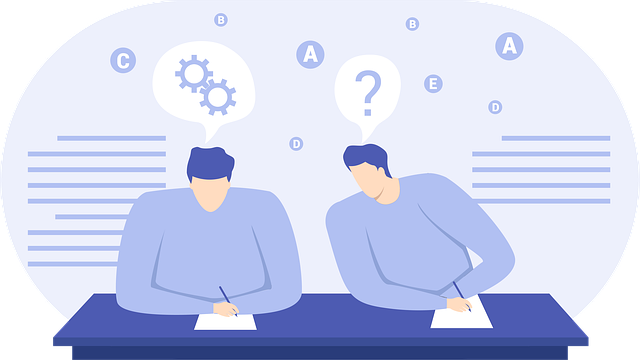
Cracking the coding interview requires a strategic approach, especially when facing algorithmic challenges. These exams, designed to assess problem-solving skills, often present complex scenarios demanding rapid analysis and efficient code generation. Success hinges on preparing for such mental acrobatics as naturally as one would train physical attributes. Consider it a digital marathon, where stamina meets precision.
Understanding cheating prevention methods is paramount in these exams. The emphasis on integrity ensures that applicants demonstrate genuine coding prowess rather than relying on memorized solutions. Applicants must learn to interpret exam questions intricately, dissecting them into manageable components. For instance, understanding the “why” behind a problem can guide candidates toward elegant, efficient solutions, fostering confidence and time management skills. This proactive approach, mirroring effective study techniques for academic performance, translates directly into better outcomes during coding exams.
Physical activity plays a surprising yet significant role in enhancing cognitive function. Studies show that regular exercise boosts memory, attention span, and problem-solving abilities—all crucial during intense coding sessions. Incorporating short bursts of physical activity or even mindful stretching breaks during study periods can significantly improve focus and clarity of thought. This, coupled with understanding cheating prevention methods and honing problem-solving strategies, equips candidates to face algorithmic challenges head-on.
To elevate performance, candidates should practice diverse problem sets, employing techniques like pseudocoding and algorithmic design patterns. Engaging in mock coding exams, especially those mimicking real test conditions, builds resilience against time pressure and unexpected question types. Remember that, as you prepare, each practice session is an opportunity to refine not just your coding skills but also your approach to problem-solving—a skill set that will serve you well beyond the oral exam presentation tips found on our platform.
Practicing with Mock Exams

Cracking the coding interview requires more than just memorizing algorithms; it demands a strategic approach to demonstrate your problem-solving prowess. One of the most effective tools in your arsenal is practicing with mock exams. These simulations serve as a bridge between theoretical knowledge and real-world application, allowing you to experience exam conditions naturally while honing your skills.
Mock exams offer a unique opportunity to engage with complex topics that might be daunting in isolation. Through structured problem sets, they encourage a systematic thinking process—a skill highly valued by hiring managers. For instance, consider mind mapping as a technique to deconstruct intricate problems. By visualizing connections between ideas, you can approach challenges from multiple angles, enhancing your ability to adapt and think creatively during an interview. Analyzing essay prompts, another common component of coding exams, sharpens your communication skills. Crafting well-structured arguments supported by evidence, such as code snippets or design patterns, showcases your technical expertise and logical reasoning abilities.
Beyond individual problem-solving exercises, mock exams facilitate a holistic preparation strategy. They provide an environment where you can practice explaining your thought processes aloud, which is crucial for conveying your approach to interviewers. Data from successful candidates reveals that those who participate in regular mock interviews consistently outperform their peers in actual exam settings. This isn’t merely about accuracy; it’s about building confidence and learning to argue effectively with evidence when presenting solutions.
Active Learning Strategies, our expert-led platform, offers a comprehensive library of tailored mock exams designed to challenge and prepare you for the rigors of coding interviews. By engaging with these resources, you’ll gain invaluable experience analyzing complex prompts, applying mind mapping techniques, and articulating your reasoning—all essential skills to crack any coding exam naturally.
Mastering Behavioral and Technical Assessment

Cracking the coding interview requires a strategic approach that transcends mere technical proficiency. Mastering both behavioral and technical assessments is paramount. Behavioral questions, often disguised as scenarios, delve into problem-solving skills, communication styles, and past experiences—all crucial for team dynamics and project management. For instance, “Describe a complex issue you faced while working on a project” not only tests your coding prowess but also how you navigate challenges and collaborate with others.
Technical assessments, meanwhile, evaluate your coding expertise and algorithmic thinking. Here, memorization techniques for retention are vital; mastering data structures and algorithms is essential. Active learning strategies—like solving problems daily or participating in code challenges—enhance comprehension and quicken problem-solving. For example, LeetCode and HackerRank offer platforms where one can practice diverse problems, from string manipulations to graph traversals.
Ensuring fair assessment practices is another cornerstone. This involves evaluating candidates based on their unique strengths and experiences rather than preconceived notions or biases. Exam questions should be crafted with clarity, specificity, and an understanding of common misconceptions. By “understanding exam questions exactly” as a candidate, you can approach the process with confidence, ensuring your skills are accurately assessed.
Data from industry reports suggests that effective assessment strategies lead to better hiring outcomes. For instance, a study by GitHub found that coding interview success rates improved significantly when active learning and fair assessment practices were implemented. This underscores the importance of approaching these exams naturally, not as mere knowledge tests but as opportunities to showcase your problem-solving journey and fit within the team dynamic.
By understanding common coding interview questions, preparing for algorithmic challenges through practice, and mastering both behavioral and technical assessments, you are equipped to confidently navigate any exam. The key insights from this article provide a solid foundation for success in cracking interviews, ensuring you not only answer questions competently but also demonstrate your problem-solving abilities and cultural fit. To maximize your readiness, start practicing with mock exams, focus on algorithmic concepts, and refine your communication skills during behavioral assessments. These practical steps will empower you to perform at your best during any coding interview.